

In a universe filled with possibilities, space technology stands out like a shiny star in the night sky. From satellites that help us navigate our morning commutes to rovers exploring the dusty surfaces of distant planets, these innovations are not just cool—they’re essential. Who wouldn’t want to know what makes space tick?
Overview of Space Technology
Space technology encompasses a range of innovations aimed at exploring and utilizing outer space. Satellites play a crucial role in communication and weather forecasting, transmitting vital data to Earth. Launch vehicles are designed for transporting spacecraft beyond the atmosphere, enabling missions to various destinations. Instruments for astronomical observations provide significant insights into celestial phenomena, contributing to the understanding of the universe.
Rovers are equipped with advanced technology to explore planetary surfaces, such as Mars, gathering samples and conducting experiments. Space probes travel far beyond our solar system, collecting information from distant celestial bodies. Communication systems ensure real-time data transfer, connecting missions with control centers on Earth.
Research and development in this field continuously drive technological advancements. Innovative materials and robotics enhance spacecraft durability and functionality. Data from space missions informs climate research and disaster management efforts, demonstrating the relevance of space technology in everyday life.
Today’s advancements, like reusable rocket technology, significantly reduce the cost of space travel, opening doors for commercial exploration. Space telescopes, such as the Hubble Space Telescope, offer unprecedented views of the universe, aiding in the discovery of exoplanets and expanding our knowledge of potential life beyond Earth.
As development continues, the exploration of asteroids and moons presents opportunities for resource extraction, potentially changing global resource dynamics. Overall, space technology paves the way for numerous applications and deeper insights into our existence in the cosmos.
Types of Space Technology
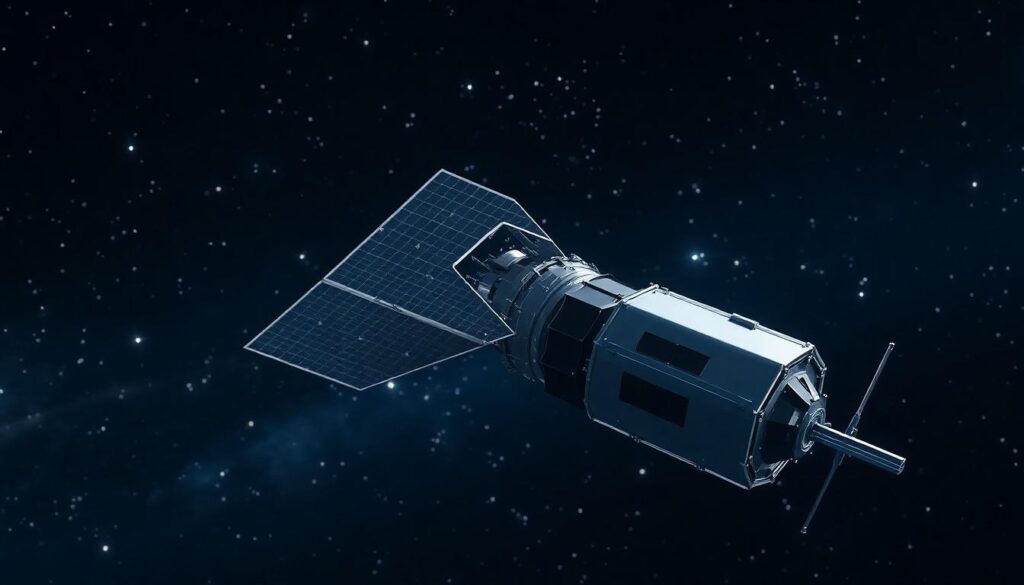
Space technology encompasses various innovations that empower exploration and utilization of the cosmos. The following sections detail key types of space technology.
Satellite Technology
Satellites serve crucial roles in communication, navigation, and weather forecasting. They provide data essential for daily activities and aid scientific research. Communication satellites enable global connectivity, while Earth observation satellites offer insights into climate patterns. Navigation satellites support GPS services, facilitating accurate location tracking. Moreover, scientific satellites gather data on cosmic phenomena, enhancing our understanding of the universe. The advancement of miniaturized satellites, known as CubeSats, has made space access more affordable and diverse.
Launch Vehicles
Launch vehicles are responsible for transporting spacecraft beyond Earth’s atmosphere. These rockets vary in size, design, and purpose, accommodating different mission requirements. The development of reusable launch vehicles, like SpaceX’s Falcon 9, has drastically reduced costs and increased launch frequency. The versatility of launch vehicles allows them to deploy satellites, crewed missions, or cargo to the International Space Station. Increasingly, companies are working on innovative propulsion technologies to improve efficiency and capabilities. Enhanced launch vehicle designs aim to support deeper space exploration and commercial ventures.
Spacecraft
Spacecraft are pivotal for exploring celestial bodies and conducting scientific research in space. These vehicles include rovers, orbiters, and landers, each designed for specific missions. Rovers, like NASA’s Perseverance, explore planetary surfaces, analyzing soil and searching for signs of past life. Orbiters provide vital data about planetary atmospheres and geology, while landers perform experiments on specific locations. Innovation in spacecraft design emphasizes durability and adaptability, allowing for extended missions beyond traditional limits. Spacecraft have become essential for interplanetary travel, expanding humanity’s reach in the solar system.
Innovative Space Technologies
Innovative space technologies significantly enhance exploration and utilization of outer space. Their development shapes the future of space endeavors.
Reusable Rockets
Reusable rockets transform the landscape of space travel. SpaceX’s Falcon 9 exemplifies this advancement, drastically lowering costs and increasing launch frequency. Each rocket returns to Earth intact, allowing for multiple flights. These innovations lead to a more sustainable approach to space missions. Other companies, like Blue Origin, also pursue similar technology, highlighting its industry-wide impact. Efficiency and affordability become pivotal in making space accessible for commercial ventures. Investment in this area continues to grow as the demand for space exploration rises.
Autonomous Spacecraft
Autonomous spacecraft revolutionize space missions by reducing the need for human intervention. Capable of making real-time decisions, these systems enhance mission efficiency and safety. NASA’s Mars rovers, such as Perseverance, showcase autonomous navigation, allowing them to traverse challenging terrains independently. This capability extends the operational lifespan of missions, enabling deeper exploration of celestial bodies. Advanced algorithms and machine learning contribute to evolving autonomous systems’ sophistication. As research advances, reliance on these technologies will likely increase in upcoming missions, shaping the trajectory of space exploration.
Applications of Space Technology
Space technology finds application in numerous areas, fundamentally enhancing aspects of daily life and scientific discovery.
Communication
Satellites are integral to modern communication networks. They facilitate mobile phone operations and enable internet services, particularly in remote regions. Broadcasting services like television also rely on satellite technology for distribution. High-frequency data transmission supports real-time weather updates. Innovations in satellite communication technology reduce latency and improve signal quality for various applications. The ubiquity of these platforms allows seamless connectivity across different continents, promoting global interactions.
Earth Observation
Earth observation satellites play a critical role in environmental monitoring. They gather data on climate change, deforestation, and urban development, providing insights that inform policy decisions. Remote sensing capabilities offer valuable resources for agricultural management, helping optimize crop yields. Disaster response benefits significantly from Earth observation as it supplies crucial information during natural calamities. Organizations utilize imagery from satellites to assess damage and coordinate recovery efforts efficiently. This technology contributes to sustainable resource management and enhances our understanding of the planet’s systems.
Space Exploration
Space exploration technologies drive human understanding of the universe. Rovers autonomously navigate planetary surfaces, conducting experiments and collecting valuable samples. Probes extend our reach to distant celestial bodies, relaying critical data back to Earth. Instruments aboard telescopes advance the search for exoplanets, unveiling potential habitats beyond our solar system. Launch vehicles, particularly reusable ones, lower the cost of sending missions into space, increasing mission frequency. Continuous advancements in robotics and artificial intelligence further enhance the capabilities of these exploration missions.
Space technology continues to transform how humanity interacts with the universe. Its advancements not only enhance daily life but also open new frontiers in exploration. The ongoing innovations in satellite systems, launch vehicles, and autonomous spacecraft are crucial for future missions and discoveries.
As research progresses, the potential for resource extraction and deeper understanding of celestial bodies expands. This dynamic field promises to reshape global dynamics and improve life on Earth through better communication, environmental monitoring, and disaster management.
With each leap in technology, humanity’s grasp of space deepens, paving the way for exciting possibilities that lie ahead.


