
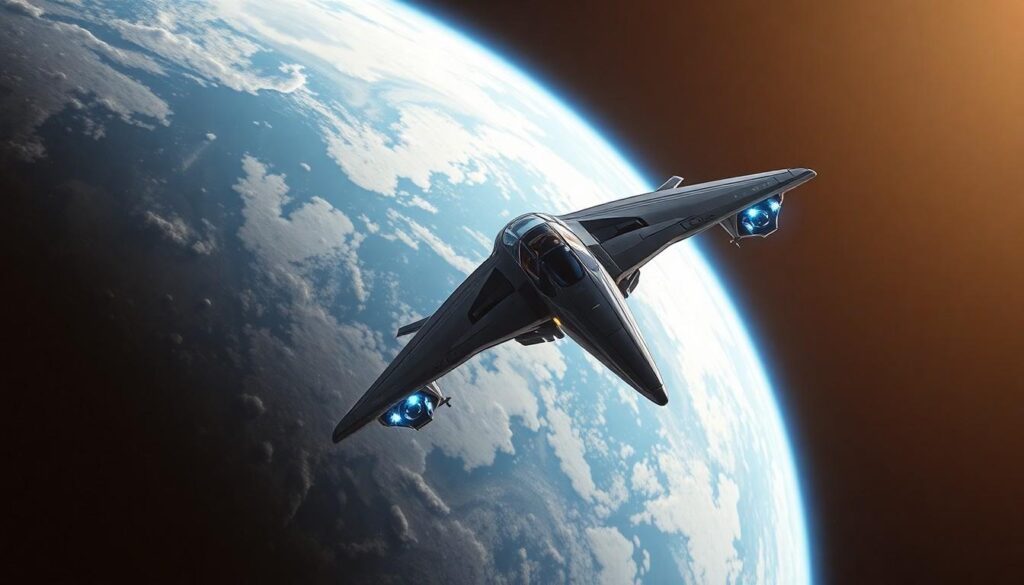
Space: the final frontier, where dreams of intergalactic travel and cosmic adventures await. As humanity sets its sights on the stars, future space technology promises to turn science fiction into reality. Imagine zipping through the cosmos in a sleek spacecraft that makes today’s rockets look like rusty old bicycles. Exciting, right?
Overview Of Future Space Technology
Future space technology aims to reshape humanity’s interaction with the cosmos. Innovations in propulsion systems promise to shorten travel times to distant planets. Ion thrusters, used by spacecraft like Dawn, enable more efficient journeys with less fuel.
Reusable launch systems are another significant advancement. Companies such as SpaceX have demonstrated the feasibility of reusing rockets, which reduces the cost of access to space. As this technology matures, the frequency of launches could increase, assisting missions to Mars and beyond.
Habitat technology is evolving as well. Modular habitats, designed for adaptability, increase the chances of sustaining human life in hostile environments. These habitats will incorporate life-support systems that recycle air and water, essential for long-term missions.
Robotic systems are set to enhance exploration capabilities. Rovers and drones can traverse terrains too dangerous for human crews. NASA’s Perseverance rover employs advanced AI to analyze samples on Mars and make decisions autonomously.
Communication technology also plays a crucial role in future space endeavors. Laser communication systems promise faster data transmission between spacecraft and Earth, improving real-time decision-making. These advancements increase the effectiveness of crewed and uncrewed missions.
Overall, space technology is progressing towards making interstellar travel a viable reality. Each innovation contributes to expanded exploration possibilities and deeper understanding of our universe. As technologies advance, the vision of humanity as a multi-planetary species draws closer.
Current Trends In Space Exploration
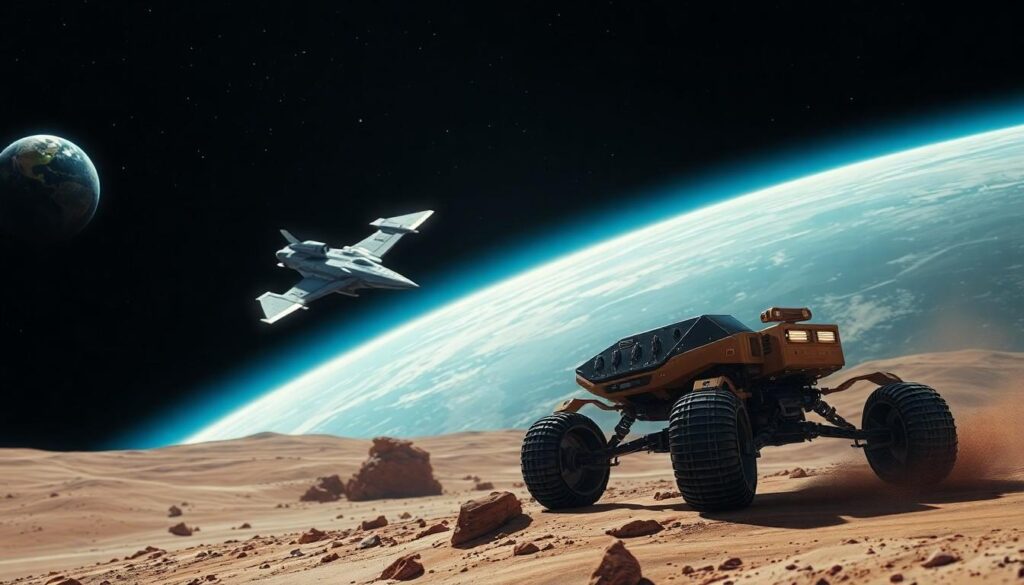
Current trends indicate significant advancements in space exploration. Numerous innovations emerge as humanity seeks to extend its reach beyond Earth.
Commercial Space Travel
Companies are rapidly expanding commercial space travel. SpaceX leads the industry, launching missions that make space more accessible. Tourists now experience brief journeys to the edge of space with Blue Origin’s New Shepard. Virgin Galactic also offers suborbital flights, marking important milestones in space tourism. As competition grows, prices drop, paving the way for a thriving commercial market. Each successful launch demonstrates the potential for routine trips beyond Earth’s atmosphere.
Space Robotics
Robotics plays a crucial role in modern space exploration. Advanced rovers, such as NASA’s Perseverance, explore the Martian surface autonomously, conducting vital research. Robots equipped with AI enhance data collection on planetary bodies, improving mission outcomes. Drones are being developed for aerial reconnaissance, providing insights into previously unreachable areas. Such technology can reduce risk to human crews during exploratory missions. The integration of robotics into space programs transforms how scientists gather knowledge about the cosmos.
Innovations In Space Propulsion
Innovative propulsion technologies significantly influence future space exploration. These systems aim to enhance travel efficiency and reduce mission durations.
Ion Propulsion Systems
Ion propulsion systems utilize electricity to generate thrust by accelerating ions. NASA’s Dawn spacecraft employed this technology to navigate the asteroid belt. Ion thrusters operate at higher efficiency compared to traditional chemical rockets, enabling longer missions with lower fuel consumption. Missions to destinations like Mars could see substantial time reductions with these systems. Spacecraft equipped with ion propulsion can maintain steady acceleration over extended periods, providing reliable transportation within our solar system.
Nuclear Thermal Propulsion
Nuclear thermal propulsion combines nuclear reactions and hydrogen fuel for thrust generation. This technology can produce two to three times more thrust than conventional rockets. Its potential for future missions to Mars or further reaches of the solar system makes it highly appealing. With a quick turnaround time for refueling, nuclear thermal systems support sustained exploration efforts. Various organizations, including NASA, are exploring this technology for deep-space missions, adhering to safety and environmental standards in design and implementation.
Advancements In Space Habitats
Innovations in space habitats are crucial for supporting human life during extended missions. Sustainable living technologies create self-sufficient systems vital for long-term stays in extraterrestrial environments.
Sustainable Living In Space
Sustainable living in space focuses on closed-loop life-support systems. These systems recycle air, water, and waste, significantly reducing the need for resource resupply from Earth. NASA’s Biomass Production Chamber experiments with growing food in microgravity, providing essential nutrition for astronauts. Advanced solar panels harness energy efficiently, powering habitats without reliance on terrestrial resources. Sustainable practices enhance resilience during missions, ensuring crew members maintain health and morale.
Modular Habitats
Modular habitats emphasize flexibility and scalability for various missions. These designs allow quick assembly and disassembly, accommodating diverse crew sizes and mission durations. NASA’s Lunar Gateway represents a practical example of modular structures, offering both living and research spaces in orbit around the Moon. Each module can cater to specific functions, such as laboratories or living quarters, maximizing usability. Easy expansion is essential for adapting to evolving mission requirements, enabling habitats to grow alongside human exploration efforts.
The Role Of Artificial Intelligence
Artificial intelligence revolutionizes space technology, enhancing efficiency and safety in various applications. Its impact extends across navigation, exploration, and data analysis.
AI In Navigation And Exploration
AI significantly improves navigation and exploration in space missions. Autonomous systems utilize advanced algorithms for precise data interpretation. Drones equipped with AI can navigate rugged terrains on celestial bodies, facilitating exploration without human intervention. These autonomous vehicles analyze surroundings in real time, allowing for swift decision-making. Rovers like NASA’s Perseverance demonstrate these capabilities by seamlessly traversing the Martian surface. AI continuously processes imagery and environmental data, ensuring optimal paths for exploration. As a result, missions can achieve their objectives more effectively, reducing risks associated with human-operated navigation systems.
AI For Data Analysis
AI streamlines data analysis in space missions, making vast amounts of collected scientific information manageable. Algorithms process data quickly, identifying patterns in otherwise complex datasets. For example, AI systems speed up the analysis of samples collected from planetary surfaces. Machine learning techniques interpret sensor data, enabling scientists to focus on critical discoveries rather than manual processing. Moreover, AI assists in predicting equipment failures by continuously monitoring system performance. Enhanced data analysis capabilities lead to improved mission outcomes and foster informed decision-making in critical situations.
Future space technology is set to redefine humanity’s relationship with the cosmos. As innovations in propulsion systems, habitat designs, and robotics continue to evolve, the dream of intergalactic travel becomes increasingly attainable. The role of AI in enhancing exploration and data analysis further accelerates this journey.
With commercial space travel expanding and reusable launch systems becoming the norm, access to space is more feasible than ever. As these advancements unfold, they not only promise to unlock new frontiers but also inspire future generations to dream bigger. Humanity stands on the brink of a new era in space exploration, ready to embrace the challenges and opportunities that lie ahead.


