

In the midst of the Cold War, when tensions ran high and competition soared, one Soviet premier decided to put his money where his mouth was—literally. He recognized that the future lay not just in military might but in the stars above. With a twinkle in his eye and a penchant for innovation, he championed investments in technology and space exploration, transforming the Soviet Union into a formidable force in the cosmic race.
The Soviet Premier That Encouraged Investment in Technology and Space
Nikita Khrushchev spearheaded significant changes in the Soviet Union’s approach to technology and space during his leadership from 1953 to 1964. He emphasized the need for innovation as a means of advancing the Soviet Union’s standing in the global arena. Under his direction, resources increasingly flowed to scientific and technological endeavors, particularly in aerospace.
Khrushchev’s focus on technological progress manifested through key initiatives. The launch of Sputnik 1 in 1957 marked the first artificial satellite’s entrance into orbit, signaling a new era in space exploration. This achievement, attributed to the Soviet space program, showcased Khrushchev’s commitment to competition in the Cold War context. It demonstrated engineering prowess and inspired generations of scientists and engineers within the Soviet Union.
Investment in research and development became a priority during his tenure. Increased funding supported space missions, satellite technology, and other scientific advancements. The culture surrounding education in science and engineering flourished, resulting in a new generation of skilled professionals.
Khrushchev also understood the political implications of technological advancements. Successfully achieving milestones in space allowed the Soviet Union to gain prestige and assertiveness on the world stage. The accomplishment of sending Yuri Gagarin, the first human in space, in 1961 further exemplified his vision of harnessing technology for national pride.
Ultimately, Khrushchev’s influence in promoting technology and space exploration laid the groundwork for future progress. His leadership marked a transformative period in Soviet history, emphasizing the critical role of innovation in maintaining global influence.
Historical Context
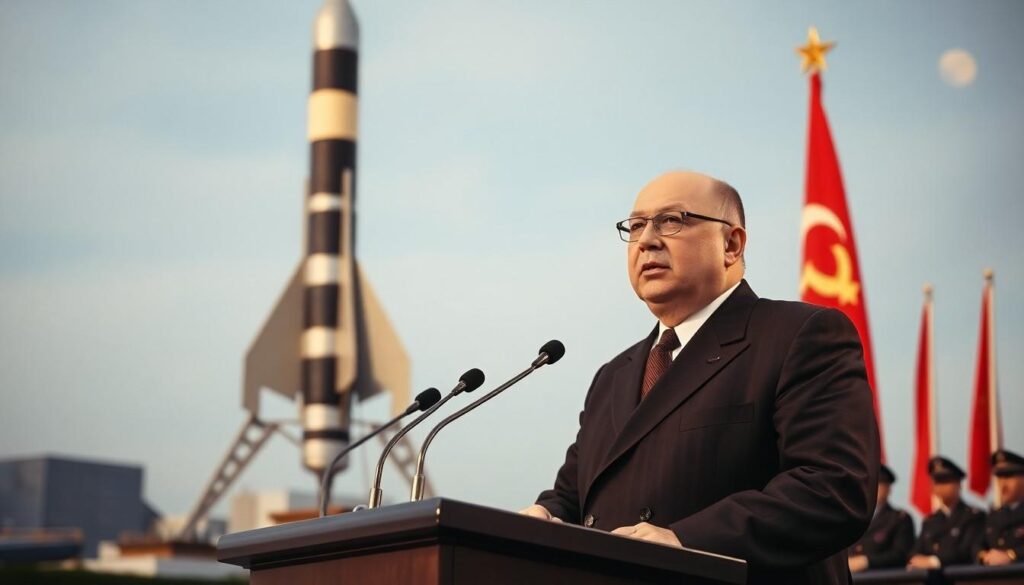
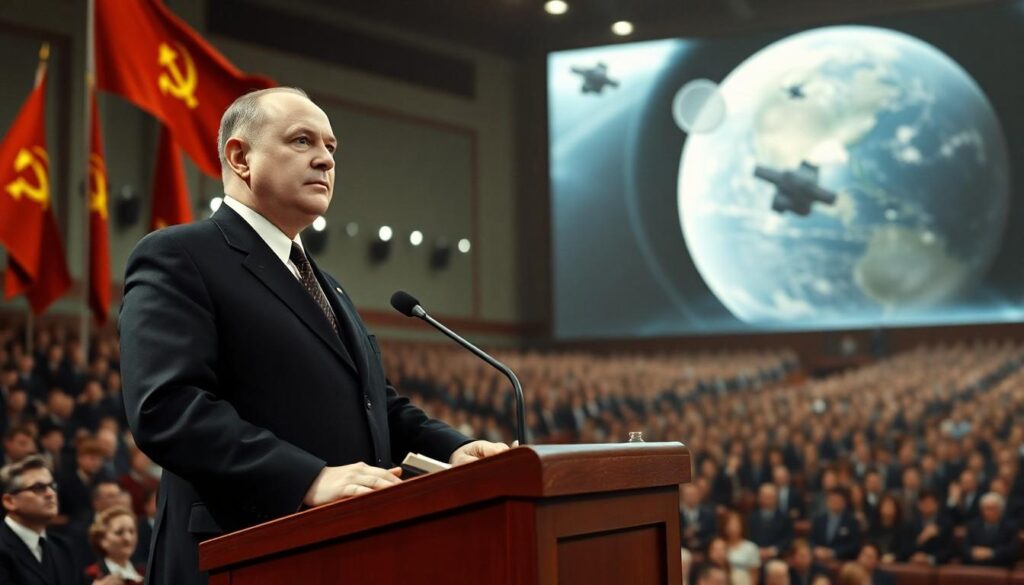
Nikita Khrushchev’s leadership period from 1953 to 1964 became pivotal for the Soviet Union’s technological and space exploration advancements. His decisions during the Cold War reshaped the nation’s focus toward innovation.
The Cold War Era
Tensions between the United States and Soviet Union defined the Cold War era. Both superpowers competed for global influence, fueling a race for technological supremacy. Khrushchev recognized the value of showcasing Soviet capabilities, shifting priorities from military might to demonstrating technological achievements. He understood that advancements in science and engineering could elevate the USSR’s status. Investments in research and development emerged as cornerstones of his strategy, fostering societal interest in technical disciplines.
Space Race Origins
The Space Race originated as a manifestation of Cold War rivalries. The launch of Sputnik 1 in 1957 marked a significant milestone, as the first artificial satellite entered Earth’s orbit. This event galvanized both nations and spurred increased investment in aerospace technologies. Khrushchev’s policies prioritized scientific endeavors, aiming to outpace the United States in space exploration. Milestones such as Yuri Gagarin’s 1961 flight solidified Soviet achievements and generated widespread national pride. By emphasizing technological prowess, Khrushchev positioned the Soviet Union as a leader in the global arena.
Key Policies and Initiatives
Nikita Khrushchev’s leadership marked a pivotal shift in Soviet policy toward technology and space. Emphasis on innovation characterized his tenure, reflecting the urgent needs of the Cold War era.
Funding for Research and Development
Khrushchev increased funding for scientific research significantly during his administration. Directing resources toward technology enabled advancements in various fields, including aerospace. Investment in universities and research institutions fostered a strong educational foundation. This approach aimed to produce skilled scientists and engineers essential for achieving space milestones. Data underscored the commitment, with spending on R&D tripling between 1955 and 1965. Such prioritization not only strengthened the workforce but also promoted a culture of innovation across the Soviet Union.
Support for Space Programs
A robust commitment to space programs defined Khrushchev’s policies. Major initiatives set the stage for historic achievements in space exploration. The launch of Sputnik 1 in 1957 illustrated the heights of Soviet engineering, capturing global attention. Initiatives expanded, leading to the successful mission of Yuri Gagarin in 1961, who became the first human in orbit. Coordination between military and civilian agencies enhanced program effectiveness, ensuring technological progress advanced rapidly. Investments aimed directly at developing satellite technology reinforced the USSR’s status as a leader in the emerging space age.
Major Achievements
Under Khrushchev’s leadership, the Soviet Union achieved remarkable advancements in technology and space exploration. Notable accomplishments transformed the USSR into a formidable player during the Cold War era.
Launch of Sputnik
Sputnik 1, launched on October 4, 1957, represented the world’s first artificial satellite. This landmark event initiated the Space Race, significantly heightening global interest in space exploration. Demonstrating Soviet engineering capabilities, Sputnik’s successful orbit inspired a generation of scientists and engineers across the globe. Funding for research and development surged, with expenditures tripling between 1955 and 1965, reflecting Khrushchev’s commitment to technological advancement. The satellite’s launch marked a pivotal moment, broadening scientific horizons and emphasizing the importance of space technology for national prestige.
First Human in Space
Yuri Gagarin became the first human to travel into space on April 12, 1961, aboard the Vostok 1 spacecraft. This historic flight lasted 108 minutes and showcased the Soviet Union’s pioneering capabilities in space exploration. Gagarin’s successful mission not only captivated the world but also elevated the USSR’s status in the Cold War rivalry. Public excitement surged, inspiring further investments in science and engineering education. Consequently, Soviet accomplishments in space became synonymous with national pride, reinforcing Khrushchev’s strategy of technological competition with the United States.
Legacy and Impact
Khrushchev’s leadership marked a pivotal transition in the Soviet Union’s approach to technology and space exploration. His emphasis on innovation reshaped global technological landscapes.
Influence on Global Technology
Khrushchev’s policies positioned the Soviet Union as a frontrunner in technological advancements. Investments in research and development tripled between 1955 and 1965, enabling the creation of skilled scientists and engineers. Enhanced funding spurred breakthroughs in various sectors, impacting fields beyond aerospace. Technologies developed for the space race often found applications in everyday life, from telecommunications to materials science. The launch of Sputnik captured global attention, allowing the USSR to demonstrate its engineering capabilities. This event prompted nations to reconsider their own technological ambitions, escalating global competition in innovation.
Continuation of Space Exploration
Khrushchev’s influence laid the groundwork for sustained progress in space exploration. Under his administration, significant missions followed, such as the Vostok program, which continued to push human boundaries. The success of Yuri Gagarin’s flight inspired a series of missions aimed at expanding human knowledge of space. Coordination between military and civilian sectors ensured effective program execution and resource allocation. The Soviet focus on education in science and engineering created a legacy of expertise that continued beyond Khrushchev’s era. Subsequent leaders capitalized on these achievements, ensuring that space exploration remained a strategic priority for the Soviet Union.
Khrushchev’s commitment to technology and space exploration reshaped the Soviet Union’s trajectory during a crucial period. His strategic investments not only advanced the USSR’s scientific capabilities but also elevated its status on the global stage. The milestones achieved under his leadership sparked a renewed interest in innovation and education, creating a legacy that influenced future generations. As the world watched the Soviet Union’s achievements unfold, Khrushchev’s vision laid the foundation for ongoing advancements in space and technology, ensuring that the spirit of exploration and discovery continued long after his tenure.


